Gabo Island Lighthouse
A 47-metre monument of hand-dressed pink granite, standing sentinel over the Tasman Sea shipping corridor since 1862.
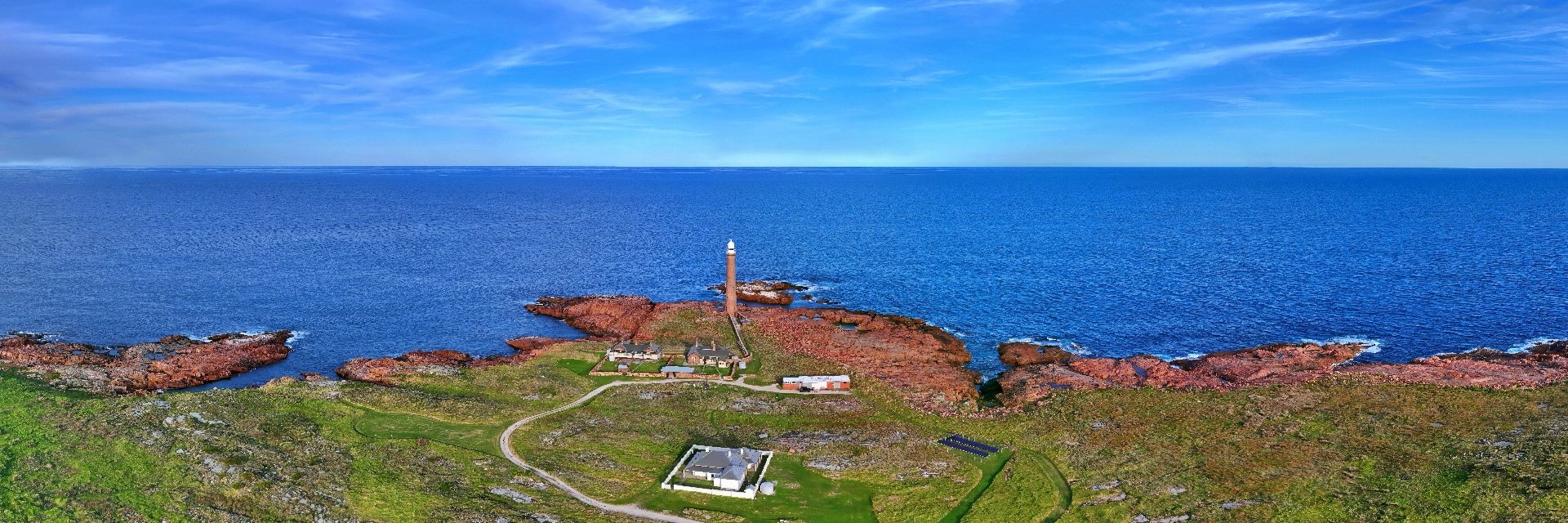
Gabo Island Lighthouse
GEN-PANO-008Pink granite, a white lantern and the keepers’ cottages. Gabo Island Lighthouse looking out to the Tasman Sea.
Architectural & Engineering Specifications
Designed by the Victorian Public Works Department and constructed under extreme maritime isolation, the tower is widely regarded as one of Australia’s finest achievements in colonial stone masonry.
| Characteristic | Specification | Authoritative Source |
|---|---|---|
| Tower Height | 47 metres (154 feet) | Victorian Heritage Database |
| Focal Plane Height | 55 metres (180 feet) above sea level | Australian Maritime Safety Authority (AMSA) |
| Construction Material | Gabo Island Pink Granite (fine-to-medium grained biotite granite) | Heritage Victoria |
| Light Character | Fl (3) 20s (Three white flashes every 20 seconds) | Admiralty List of Lights / AMSA |
| Nominal Range | 18 Nautical Miles (~33 kilometres) | AMSA Navigation Aids |
| First Illuminated | November 1862 | National Archives of Australia |
| Heritage Status | Victorian Heritage Register (VHR H1832) | Heritage Council Victoria |
The Catalyst: The Wreck of SS Monumental City (1853)
Although colonial navigators had lobbied for an oceanic beacon near Cape Howe since the 1840s, it took a disaster of catastrophic proportions to force colonial treasuries into action.
In the early morning of 15 May 1853, the 1,000-tonne American passenger screw-steamer SS Monumental City was steaming from Melbourne toward Sydney carrying goldfields passengers and crew. Navigating blindly in calm but deceptive weather, she ran hard aground on the reef near Tullaberga Island and Gabo.
The vessel broke apart in the surf with the tragic loss of 37 lives. The outrage that echoed through newspapers in Melbourne and Sydney demanded an immediate aid to navigation. Within twelve months, a temporary skeletal wooden lighthouse was thrown up in 1854 while plans for a permanent stone tower were prepared.
Quarrying Pink Granite & The Bankruptcy of Robert Huckson
In the late 1850s, Melbourne building contractor Robert Huckson won the public tender to construct the permanent tower. The contract called for the tower to be built entirely of durable native granite, quarried from the island itself.
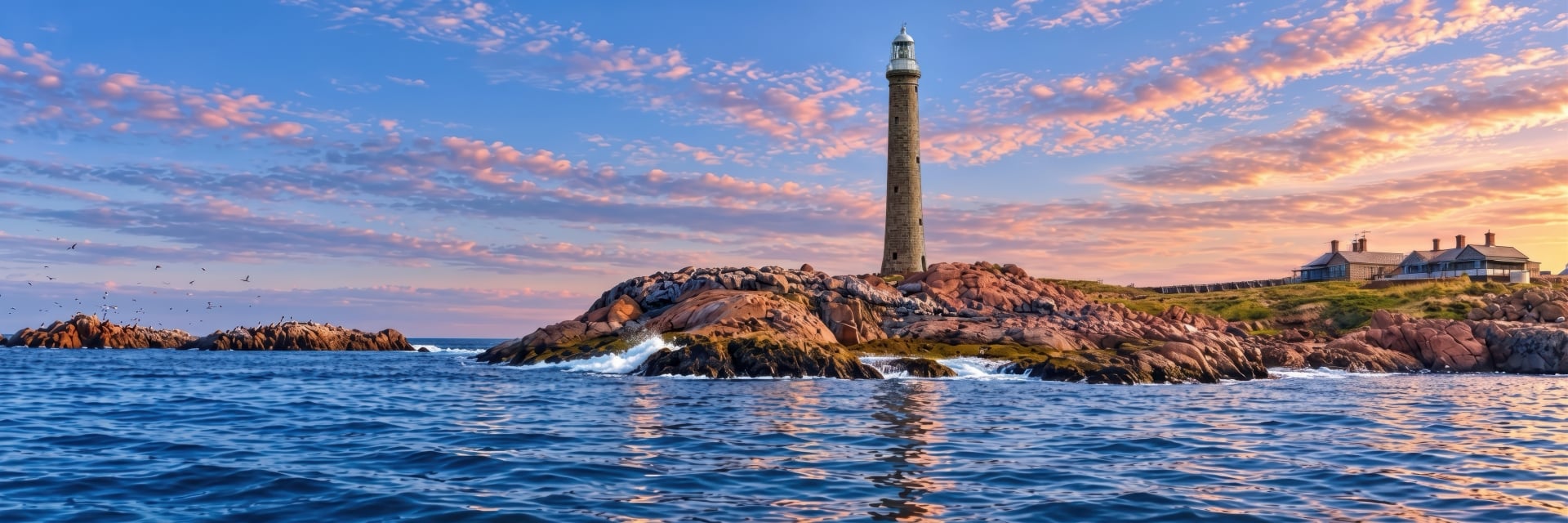
Gabo Lighthouse from the Water
GEN-PANO-013The granite tower from the sea. Pink rock, keepers’ cottages and a sky of evening colour on Gabo Island.
Huckson transported stonemasons, labourers, derrick cranes, and heavy forge equipment to Gabo Island. The reality of working on an exposed oceanic rock soon overwhelmed the enterprise:
- Severe Weather: Southern Ocean storms repeatedly smashed supply cutters and delayed rations, leaving work crews stranded for weeks.
- Granite Hardness: The Gabo pink granite proved extraordinarily dense and tough, rapidly dulling chisels and requiring massive powder blasting and arduous manual dressing.
- Financial Ruin: Unforeseen delays, rising supply freight costs, and the harsh environment led Huckson into financial exhaustion and eventual bankruptcy before the tower’s completion.
The Victorian Public Works Department stepped in to supervise completion of the works, and the magnificent first-order Chance Brothers revolving dioptric optic was finally illuminated in November 1862.
From Keepers to Automation (1993)
For 131 continuous years, Gabo Island Lighthouse was maintained by resident lightkeepers working in demanding 4-hour night shifts. Keepers wound the clockwork rotation mechanism, trimmed the oil wicks (later gas and incandescent kerosene mantles), cleaned soot from the massive optical prisms, and logged weather and passing ships.
In 1993, the Australian Maritime Safety Authority (AMSA) fully converted the station to automated solar power, and the final resident lightkeepers departed the island.