Visiting Gabo Island
An isolated oceanic reserve 14 kilometres south-east of Mallacoota. Accessible only by chartered light aircraft or licensed boat in suitable sea conditions.
Access by Light Aircraft
Flying is the most dependable method of reaching Gabo Island. Fixed-wing charter flights operate on demand from Mallacoota Airport (YMCO), touching down on Gabo Island’s unsealed grass airstrip in approximately 10 to 12 minutes.
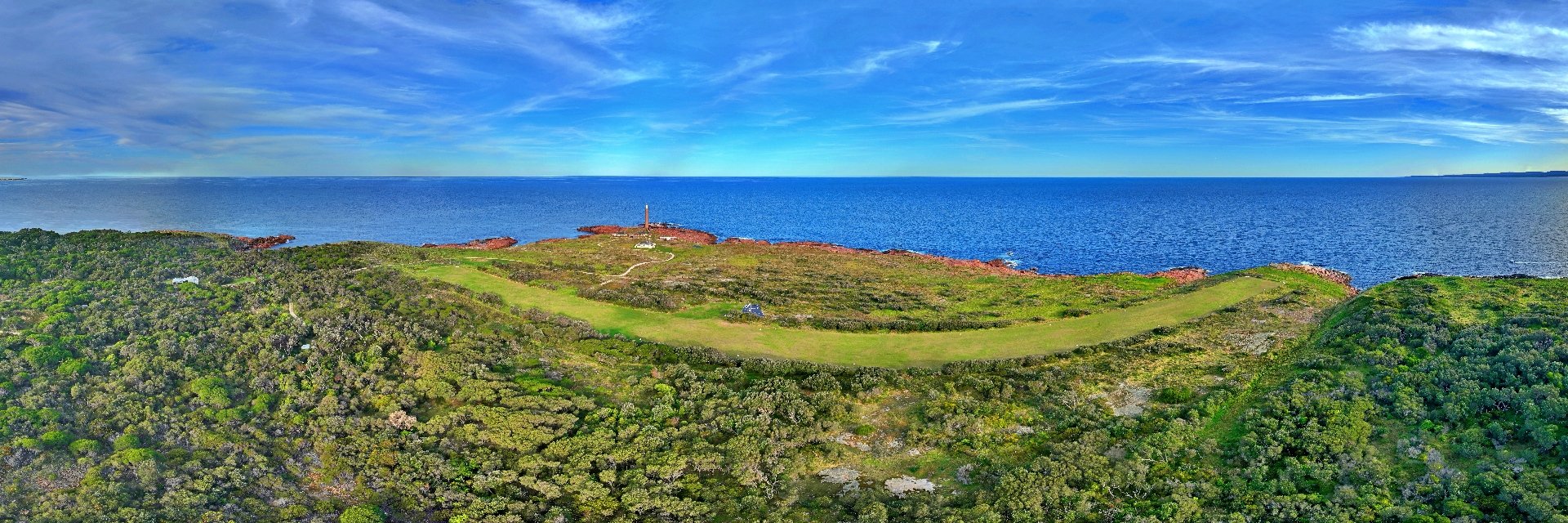
Gabo Island Airstrip
GEN-PANO-009The grass strip on the island. Coastal scrub, a green runway and the lighthouse standing on the granite point.
Airstrip Details: The unpaved grass strip spans the central plateau of the island. It is rated for daylight VFR operations by authorized charter pilots. Flight availability is subject to coastal wind limits and ground saturation following heavy rains.
Access by Sea & Harbour Transfer
Licensed passenger vessels depart from Mallacoota wharf, navigating across the Mallacoota inlet bar and into the open waters of the Tasman Sea. Landing takes place at the concrete jetty inside Santa Barbara Bay at the north end of the island.
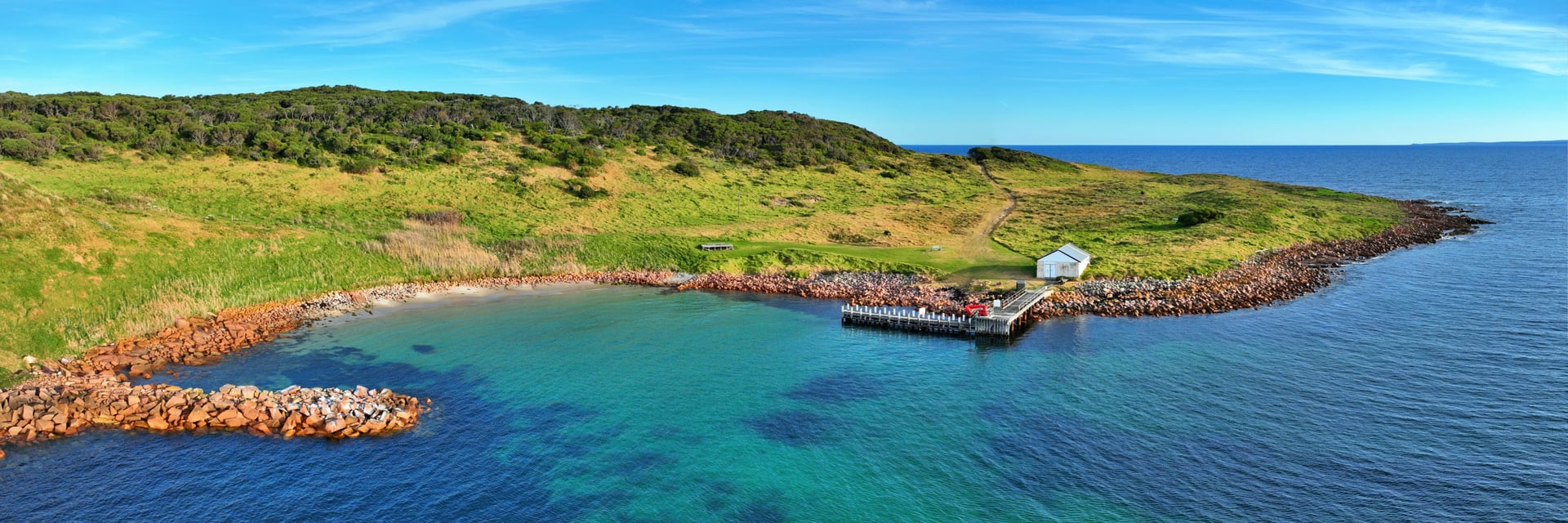
Gabo Harbour & Jetty
GEN-PANO-016The island landing. A granite breakwater, a white shed on the jetty and clear water in Santa Barbara Bay.
Crossing the Mallacoota bar and navigating past Telegraph Point requires gentle sea states and favourable swell directions. Even when the mainland weather appears benign, ocean swells can prevent safe disembarkation onto the island jetty.
Essential Equipment & Supplies
Gabo Island has no shops, cafes, medical facilities, or public trash collection. Visitors must arrive entirely self-sufficient.
| Item Category | Recommendation | Notes |
|---|---|---|
| Provisions & Food | 100% of food required, plus 24–48 hours emergency surplus | Severe maritime weather can delay scheduled departure flights or boat pickups. |
| Drinking Water | Personal water bottles | Rainwater tanks service the cottage, but conservation is strictly mandatory. |
| Clothing | Sturdy enclosed footwear, windproof shell, thermal layers | Granite walking pads are uneven; coastal winds are relentless even during summer. |
| Lighting & Torch | Red-light headlamp or torch | Red light is mandatory at dusk and night to avoid blinding nesting Little Penguins. |
| Waste | Pack it in, pack it out | All personal rubbish, organics, and recyclables must be removed from the island. |
Safety, Wildlife Protection & Island Regulations
Gabo Island is a sensitive wildlife habitat managed under the Victorian Crown Land (Reserves) Act 1978 and Wildlife Act 1975.
Parks Victoria Regulations:
- Stay on Formed Tracks: The island’s sandy turf is honeycombed with thousands of fragile penguin and shearwater burrows that collapse under foot.
- Strict Prohibition on Pets: Domestic animals, dogs, and cats are strictly prohibited at all times to protect ground-nesting seabirds.
- Fire Prohibition: Total fire ban across the island. Solid-fuel barbecues, campfires, and open flames are forbidden.
- Drone Regulations: Launching unauthorized drones is prohibited under Victorian wildlife protection regulations to prevent disturbance to breeding seabird colonies and seals.