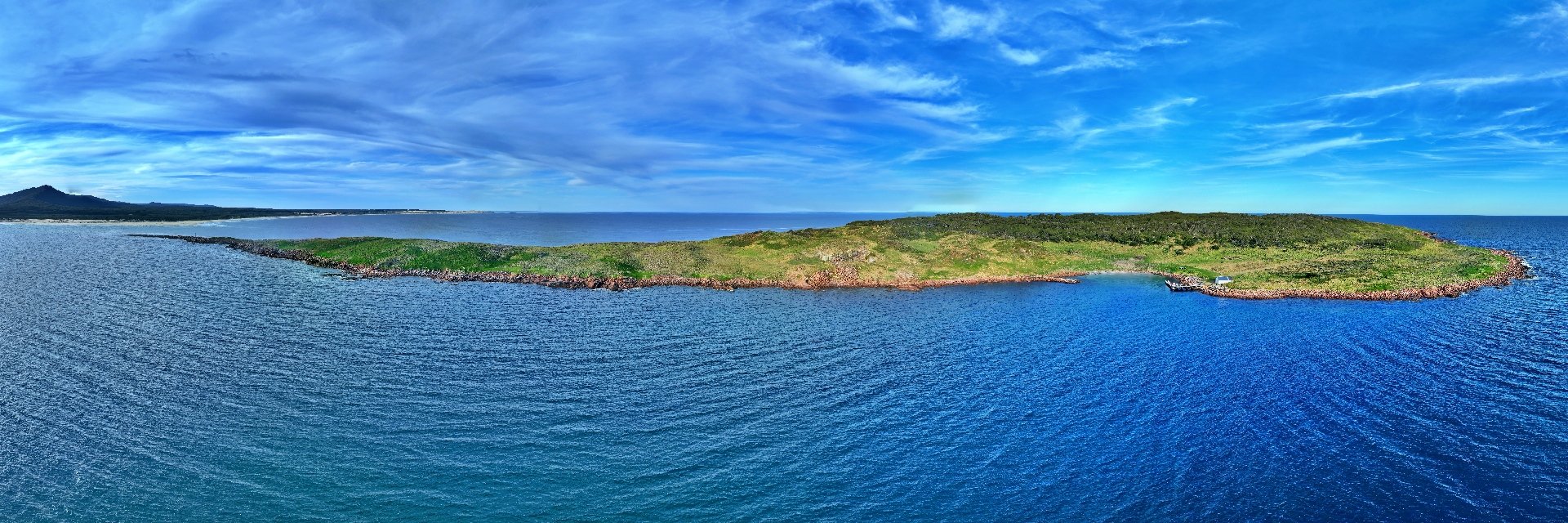
Gabo Island from the Sea
GEN-PANO-010The whole island from the water. Forested granite, a rocky cove and the East Gippsland mainland coast beyond.
Documentary Photograph: The wild oceanic setting of Gabo Island — granite reefs, tidal surge channels, and the surrounding waters where seals hunt (Panorama by Colin Dixon).
To stand on the granite headlands of Gabo Island is to watch an ancient maritime sanctuary at work.
Beneath the waves, the seafloor drops into deep ocean trenches where the nutrient-rich waters of Bass Strait swirl into the Tasman Sea. Above the surface, wave-polished pink granite ledges offer something equally vital to a marine mammal: a safe, sun-warmed place to dry out, sleep, and rest.
Gabo Island and neighbouring Tullaberga Island are home to two distinct pinniped species, each adapted to a different dimension of the coastal environment:
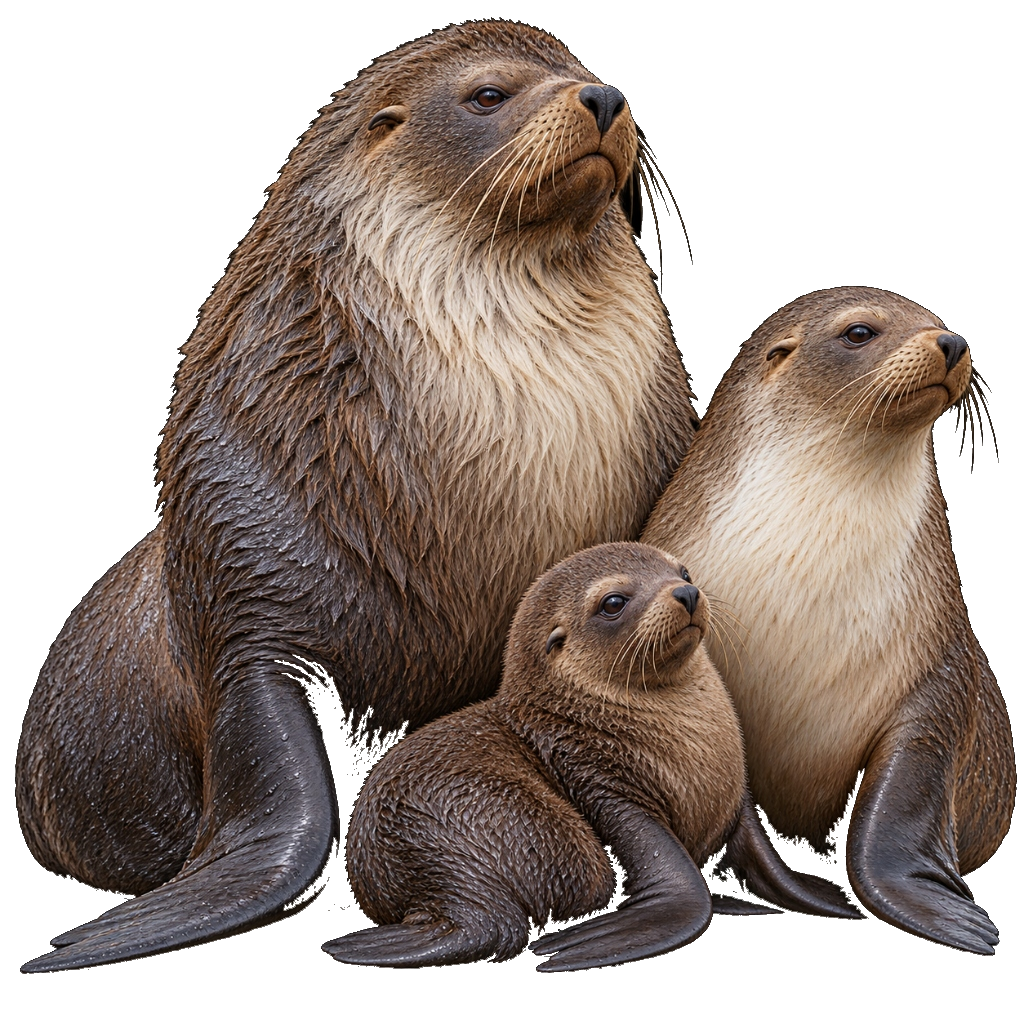
Australian Fur Seal
Arctocephalus pusillus doriferus
The heavyweight monarch of the southern reefs. Adult bulls reach 360 kg with massive blonde manes and blunt muzzles, hauling out across flat granite slabs to warm their blood in the sun.
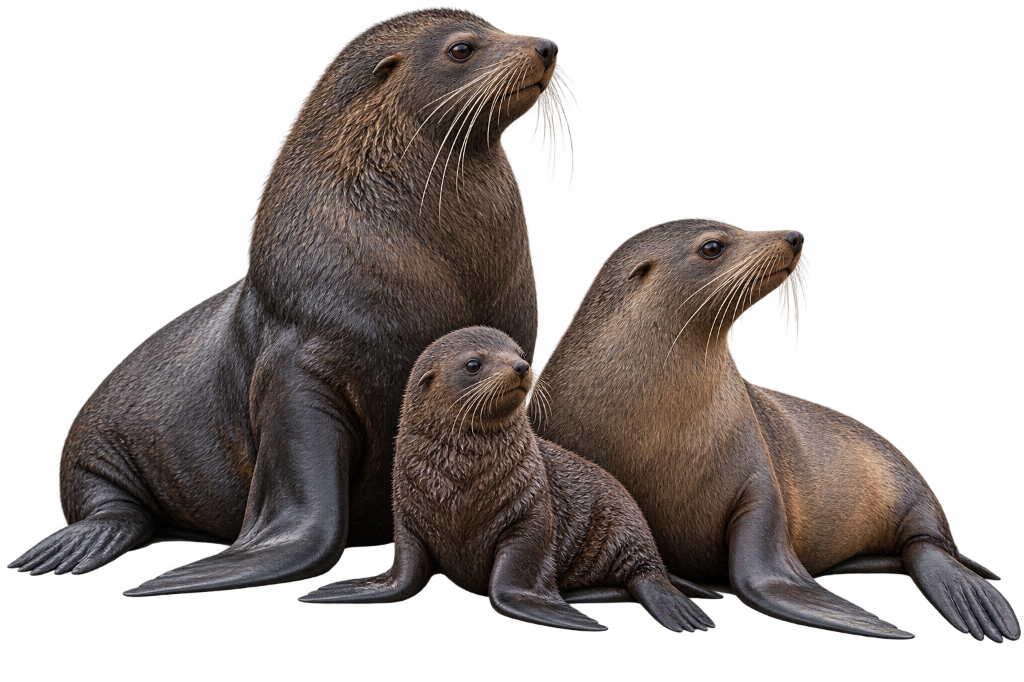
Long-nosed Fur Seal
Arctocephalus forsteri (New Zealand Fur Seal / Kekeno)
The agile acrobat of the outer surge. Sharply pointed snout, trailing white whiskers, and charcoal coat. An extreme deep-diver plunging down to 380 metres in pursuit of lanternfish and squid.
How to Distinguish the Two Species on the Rocks
Because both species haul out along the same coastline, telling them apart requires attention to posture, facial profile, and habitat choice:
| Feature | Australian Fur Seal | Long-nosed (New Zealand) Fur Seal |
|---|---|---|
| Muzzle Profile | Broad, blunt, square dog-like muzzle | Narrow, sharply tapered, upturned snout |
| Facial Whiskers | Moderate length, darker bases | Very long, trailing pale whiskers reaching past ears |
| Adult Bull Size | 2.0–2.25 m · 220–360 kg (massive thick neck & blonde mane) | 1.5–2.0 m · 120–180 kg (darker, more athletic frame) |
| Coat Colour (Dry) | Rich fawn to yellowish-grey; females with pale silvery chests | Dark charcoal-grey to deep brown; nearly pitch black when wet |
| Preferred Haul-Out | Wide, gently sloping granite slabs and open platforms | Steep, fractured boulder fields, surge gullies & sea caves |
| Foraging Style | Benthic continental shelf diver (60–150 m for squid & reef fish) | Pelagic deep-sea diver (routinely 100–300 m, recorded to 380 m) |
Haul-Outs vs Breeding Rookeries
Neither Gabo Island nor Tullaberga Island is a primary pupping rookery where hundreds of pups are born each December. Instead, they serve as crucial non-breeding haul-outs.
Bulls resting between demanding mating seasons, sub-adults refining their diving skills, and weary foraging groups use these pink granite shelves as a safe sanctuary. Because Gabo is isolated from mainland terrestrial predators like foxes and wild dogs, seals can sleep soundly just above the high-tide line.
The Recovery of Bass Strait Seals
In the early 1800s, British and colonial sealers wiped out colonies throughout Bass Strait, slaughtering hundreds of thousands of animals for oil and pelts until the industry collapsed in commercial exhaustion.
Today, under state and Commonwealth legal protection, fur seal numbers have staged a remarkable, steady comeback. Their daily presence around Gabo Island is living proof that wild marine ecosystems can heal when granted time and legal refuge.
Gabo Island Wildlife & Lighthouse Art
Explore authentic Gabo Island artwork — including the Australian Fur Seal, New Zealand Fur Seal, Little Penguin, and Gabo Lighthouse — on premium tees, hoodies, prints, and stickers at Redbubble.
Visit Colin Dixon’s Redbubble Shop →