People of Gabo Island
Documenting the generations of lighthouse keepers, families, quarrymen, stonemasons, and maritime operators who lived on an isolated rock in the Tasman Sea.
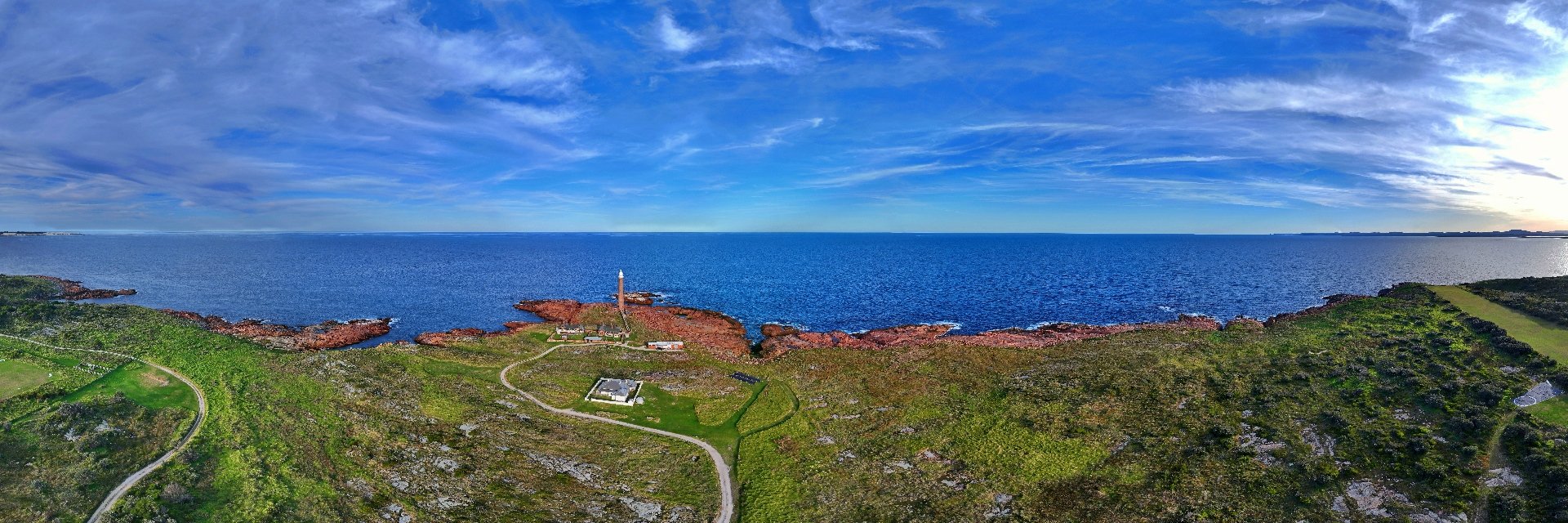
Gabo Lighthouse Station
GEN-PANO-011The station on the headland. Paths, cottages and the granite lighthouse against a long run of ocean.
Note on Island Residency: Gabo Island has had no permanent civilian town or private residents since the Commonwealth Lighthouse Service automated the station and withdrew resident lightkeeper families in 1993. Today, the island is visited and cared for by rotating Parks Victoria rangers, contractors, research scientists, and heritage cottage guests.
Robert Huckson
Lighthouse Contractor (1859–1862)
A Melbourne builder who won the Victorian colonial tender to build the permanent 47-metre stone tower. Facing relentless Tasman Sea storms, shipwrecks of supply vessels, and the extreme hardness of Gabo pink granite, Huckson was driven into financial bankruptcy. Despite his personal financial ruin, the monumental granite tower he raised has stood intact for over 160 years.
The Quarrymen & Stonemasons
Granite Cutters & Labourers (1859–1862)
A hardy crew of Scottish and colonial stonecutters lived in rough timber shacks in the northern cove. Using black-powder blasting, plug-and-feather wedges, and hand chisels, they cut several thousand tonnes of massive pink granite blocks weighing up to four tonnes each, dressing them on site before hauling them on wooden rollers to the southern headland.
The Head Lightkeepers
Station Commanders (1854–1993)
Over 130 years, dozens of appointed head lightkeepers maintained the continuous oceanic watch. They managed station stores, operated the dioptric optic, maintained kerosene vaporisers and clockwork weights, recorded hourly barometric and wind data for the Bureau of Meteorology, and coordinated maritime distress signals for Tasman Sea shipping.
Keepers’ Wives & Families
Island Homemakers (1862–1993)
Isolation required extraordinary resilience. Wives baked bread from barrelled flour, tended vegetable gardens behind granite drystone windbreaks, and educated their children via correspondence school and the Victorian Black Rock correspondence branch. Milking cows and sheep were swum across the narrow mainland channel at low tide to provide fresh dairy and meat.
Children of the Island
Island Childhoods
Children raised on Gabo Island experienced an upbringing unlike any mainland schoolchild. They roamed among thousands of nesting Little Penguins, collected beach-cast shells and whalebone, assisted with weather flags and wind gauges, and learned to fish for snapper and leatherjackets off the granite breakwater.
Telegraph Operators & Boat Crews
Signallers & Supply Crews (1888–1960s)
Following the laying of the 1888 subsea telegraph cable, signal operators manned the Morse key around the clock, transmitting reports of passing international steamships and coordinating rescue efforts during Tasman Sea shipwrecks. Local Mallacoota boatmen risked treacherous bar crossings to deliver mail, groceries, and coal.
“Do you have family records, historical photographs, or journals relating to lightkeepers who served on Gabo Island? Help us build Australia’s most comprehensive independent record.”